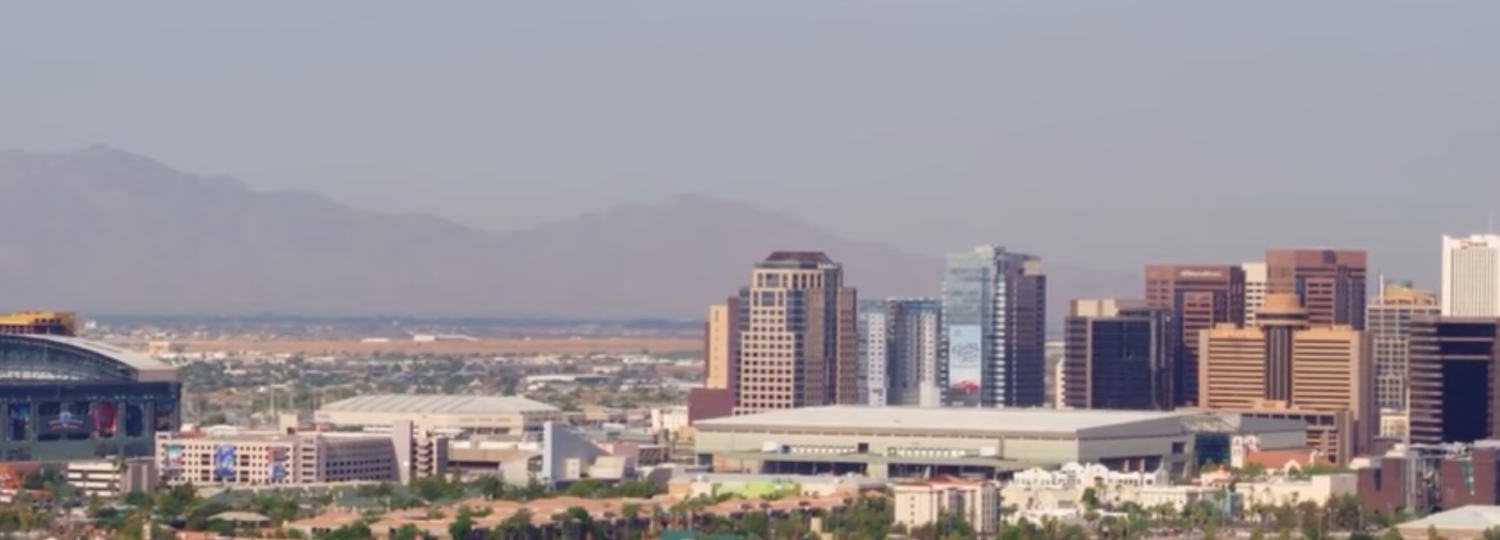
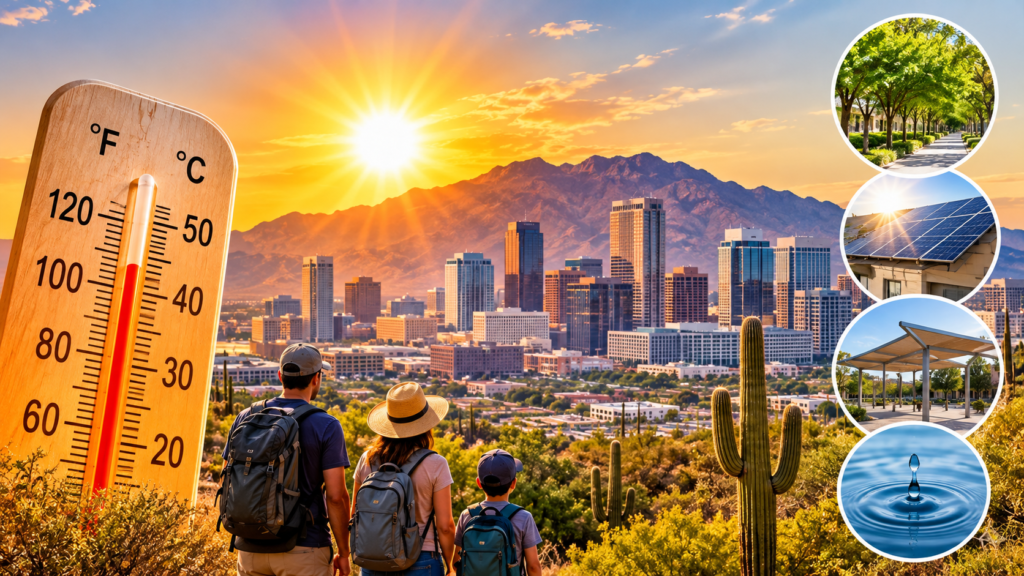
Phoenix is not expected to suddenly become “uninhabitable” on a specific date. But if extreme heat keeps rising and the city does not continue adapting, parts of Phoenix could become much harder—and more dangerous—to live in by mid-century, especially for older adults, outdoor workers, people without reliable cooling, and residents experiencing homelessness.
The short answer: Phoenix will likely remain habitable through 2050, but it may become significantly less comfortable, more expensive, and riskier without major heat protection. By the 2050s, projections suggest Phoenix could regularly see 120 or more days above 100°F each year.
What “Uninhabitable” Really Means
When people ask whether Phoenix will become uninhabitable, they usually mean one of three things:
- Physically impossible to live there: This is unlikely in the foreseeable future because people can use air conditioning, shade, water, and indoor work to survive extreme heat.
- Too dangerous for many residents: This is already a serious concern. Heat-related deaths in Maricopa County reached 645 in 2023, then fell to 602 in 2024 despite Phoenix recording its hottest summer on record.
- Too expensive or difficult for ordinary life: This is the more realistic long-term risk. Higher cooling bills, water stress, health costs, and the need for shade and cooling infrastructure could make Phoenix less attractive for some households.
So the better question is not “When will Phoenix become uninhabitable?” but “How hot can Phoenix get before daily life becomes unsafe for too many people?”
How Hot Is Phoenix Already?
Phoenix has always been hot, but its heat season is becoming longer and more intense. The city’s climate materials note about 110 days per year with highs above 100°F and 19 days above 110°F.
In 2024, the Phoenix metro area endured 113 consecutive days at or above 100°F, from May 27 through September 16. That is not just an uncomfortable statistic—it means months of sustained heat that can strain the body, power grid, water supply, and emergency services.
Heat becomes especially dangerous when nighttime temperatures stay high. If your body never gets a chance to cool down overnight, the risk of heat illness rises. This is why Phoenix’s heat problem is not only about afternoon highs; it is also about warm nights, concrete, asphalt, and limited shade.
What Climate Projections Say
Climate models do not predict one exact “deadline” for Phoenix. Instead, they show a range of futures based largely on how much greenhouse gas pollution continues.
Recent projections suggest:
- By the 2050s, Phoenix could average 120 or more triple-digit days per year.
- Under a lower-emissions path, Phoenix may average about 124 days above 100°F by 2050; under higher emissions, that could rise to about 134 days.
- By the 2080s, projections range from roughly 131 to 156 days per year above 100°F, depending on emissions.
- The number of days above 110°F could become three to five times higher than the historical baseline by 2030 and 2050, according to a Phoenix heat assessment.
That does not mean Phoenix becomes empty by 2050. It means the city may need to treat extreme heat as a year-round public-safety issue, much like other cities treat winter storms or flooding.
The Biggest Risks: Heat, Water, and Cost
Dangerous heat
Extreme heat is already deadly. In 2023, Maricopa County recorded 645 heat-associated deaths, a 52% increase over the previous year. Most of those deaths occurred among people age 50 or older, and most happened on days when excessive heat warnings were issued.
The people most at risk include:
- Older adults living alone
- People with heart, lung, kidney, or other chronic conditions
- Outdoor and delivery workers
- People experiencing homelessness
- Low-income households that cannot afford high summer power bills
- People without access to air conditioning or transportation to cooling centers
Phoenix’s 2024 decline in heat deaths shows that action can help. But it also shows that heat remains a major threat: even during a record-hot summer, 602 people died from heat-related causes in the county.
Water pressure
Phoenix is in a desert, so water is always part of the conversation. However, “running out of water” is not the same as becoming uninhabitable. The bigger issue is managing demand as temperatures rise, populations grow, and the Colorado River faces long-term stress.
Phoenix can remain livable with careful water planning, but heat makes water more valuable. More water may be needed for cooling, landscaping, public health, and maintaining trees and shade. The challenge is using water wisely while protecting the people most exposed to heat.
Rising living costs
Air conditioning is not optional in Phoenix—it is a survival tool. As heat increases, households may face higher electric bills, especially during long heat waves. That can push cooling costs beyond what some families can comfortably afford.
This is where “uninhabitable” becomes less about temperature and more about affordability. A city can be technically livable, but still become difficult for people who cannot afford safe housing, reliable cooling, healthcare, or transportation during dangerous heat.
Could Phoenix Become a “Climate Refuge” Problem?
Some headlines compare Phoenix to places that may become too hot for human life. But Phoenix is different from a remote desert with no infrastructure. It has a large economy, hospitals, water systems, power infrastructure, universities, and millions of residents.
The real risk is not that everyone leaves overnight. It is that Phoenix could become unequally livable: comfortable for people with well-insulated homes, steady income, air conditioning, and access to shaded neighborhoods, but dangerous for people without those protections.
That makes heat equity one of Phoenix’s most important climate challenges. If heat protection reaches only wealthy neighborhoods, the city may remain habitable on paper while becoming unsafe for vulnerable communities.
What Phoenix Is Doing About It
Phoenix is not simply waiting for the heat to arrive. The city has set a goal to create 30 cool corridors in vulnerable communities by 2030. It also aims to increase tree and constructed shade in pedestrian areas to 25% canopy coverage by 2030, prioritizing neighborhoods most vulnerable to heat.
Trees and shade are not just decorative. Research cited by the city found that increasing tree canopy to 25% could lower temperatures in a typical neighborhood by 4.3°F, while a bare neighborhood could see a cooling benefit of up to 7.9°F.
The city is also using tools such as cool roofs, permeable pavement, and stormwater capture to reduce the urban heat-island effect. These solutions will not erase Phoenix heat, but they can make a meaningful difference in how survivable summer feels.
So, When Could Phoenix Become Uninhabitable?
There is no credible single year when Phoenix “becomes uninhabitable.” But here is a practical way to think about the timeline:
| Time period | What may happen |
|---|---|
| Now to 2030 | Heat remains dangerous, but adaptation can reduce deaths. Phoenix targets more shade, cool corridors, and heat-relief resources by 2030. |
| 2030 to 2050 | Triple-digit days could become more common, with projections pointing to 120+ days above 100°F by the 2050s. Cooling costs, health risks, and heat inequality may increase. |
| 2050 to 2080 | Without strong emissions cuts and local adaptation, Phoenix could face 131 to 156 days above 100°F annually. Life may still be possible, but outdoor work, walking, and housing affordability could become much harder. |
The most accurate answer is: Phoenix is not likely to become uninhabitable by 2050, but it could become a much harder place to live if heat protection does not keep pace with rising temperatures.
What Would Make Phoenix More Livable?
Phoenix’s future depends less on one dramatic date and more on everyday choices. The most effective steps include:
- Expanding tree canopy and shade in neighborhoods that need it most
- Building more cool corridors for walking, biking, and public transit
- Improving home insulation and access to affordable air conditioning
- Protecting outdoor workers with shade, water, rest breaks, and adjusted schedules
- Expanding cooling centers and outreach for people experiencing homelessness
- Using water efficiently while maintaining urban greenery
- Reducing emissions to limit how extreme future heat becomes
Phoenix will probably not become uninhabitable in the way movies imagine. But without continued investment in shade, cooling, water planning, and heat equity, it could become a city where summer is dangerously difficult for many residents.
The good news is that the future is not fixed. Phoenix can remain a livable desert city—but only if it treats extreme heat as a public-health emergency, not just a weather forecast.