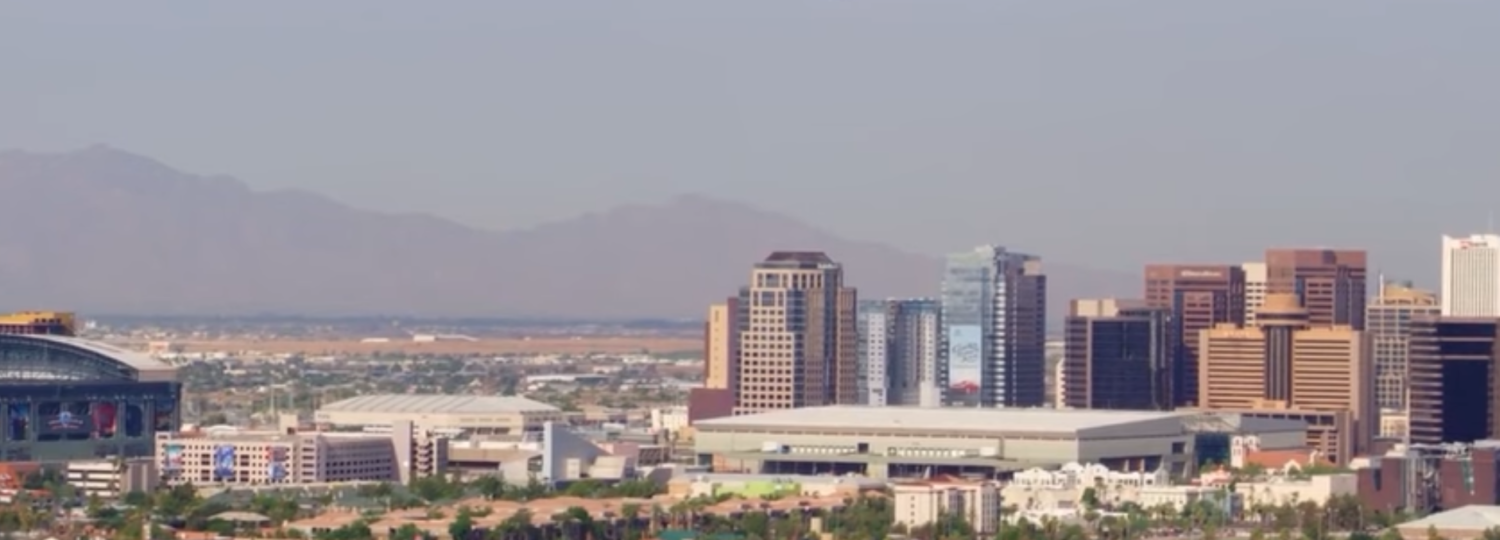

Phoenix experienced its greatest amount of growth during the 1950s. In just one decade, the city’s population increased from about 106,000 people in 1950 to approximately 439,000 by 1960. That means Phoenix’s population more than quadrupled while its land area expanded from roughly 17 square miles to nearly 188 square miles.
This dramatic transformation changed Phoenix from a small agricultural community into a major American city. Although Phoenix continued growing during the 1960s, 1970s, and beyond, the 1950s stand out as the city’s most important and explosive period of expansion.
Phoenix Before Its Biggest Growth
Phoenix did not become a large city overnight. Its early development depended on water, farming, transportation, and the determination of settlers who believed the desert could support a thriving community.
Long before modern Phoenix was established, the Hohokam people created an extensive canal system in the Salt River Valley. These canals helped move water to farmland and allowed agriculture to flourish in an otherwise dry environment. Later settlers reused and expanded parts of this ancient irrigation network.
Modern Phoenix began developing in the late 1800s. Farmers were attracted to the valley because irrigation made it possible to grow crops such as cotton, citrus, and grains. Phoenix was incorporated as a city in 1881 and became the territorial capital of Arizona in 1889.
During its early years, Phoenix grew steadily but remained relatively small. Between 1885 and 1890, its population tripled from about 1,000 to more than 3,000 residents. The arrival of railroads also helped connect the community with other parts of Arizona and the United States.
The early 20th century brought additional progress. The construction of Roosevelt Dam improved water storage and gave farmers greater confidence that the valley could support long-term settlement. Phoenix also benefited from Arizona statehood in 1912, which increased its political and economic importance.
Even with these improvements, Phoenix was still a modest farming town in the first half of the 20th century. The city had not yet developed the sprawling neighborhoods, broad highways, industrial districts, and commercial centers that would later define its identity.
The 1950s Created a Population Explosion
The 1950s were the turning point for Phoenix. The city entered the decade with about 106,000 residents and ended it with roughly 439,000. This increase of more than 300,000 people made the 1950s the period of greatest population growth in Phoenix’s history by percentage.
Several powerful forces worked together to create this boom.
Air Conditioning Made Desert Living Easier
One of the most important factors was the widespread adoption of air conditioning. Phoenix has extremely hot summers, and before affordable cooling systems became common, the climate limited how comfortably people could live and work in the area.
Air conditioning changed that situation. Homes, offices, stores, factories, schools, and public buildings became more comfortable throughout the year. The desert heat was no longer an insurmountable barrier for families and businesses considering a move to Phoenix.
This technology helped make year-round living in Phoenix more practical. It also encouraged developers to build larger residential communities farther away from the traditional downtown area.
In simple terms, air conditioning helped turn Phoenix from a seasonal destination into a permanent home for hundreds of thousands of people.
World War II Strengthened the Local Economy
World War II also played a major role in Phoenix’s growth. Military activity and defense-related industries brought jobs, workers, and investment to the region.
Military bases in and around Phoenix supported training, aviation, manufacturing, and logistics. Luke Field, Williams Field, and other military facilities connected the area to the national defense network. These installations brought thousands of service members and civilian workers to the Valley.
After the war ended, many people who had arrived for military work, industrial jobs, or training decided to remain in the area. Returning soldiers also contributed to the postwar housing boom. Phoenix offered land, a warm climate, and new opportunities at a time when many American families were looking for a fresh start.
The city’s economy began moving beyond agriculture. Manufacturing, aviation, electronics, construction, retail, and tourism became increasingly important sources of employment.
Federal Programs Encouraged New Housing
The postwar period also produced a nationwide housing boom. Federal programs supported homeownership, mortgage lending, transportation projects, and suburban development.
Phoenix had plenty of available land, making it easier for developers to build new communities. Unlike older cities in the eastern United States, Phoenix was not as restricted by dense neighborhoods, narrow streets, or established urban boundaries.
Developers could create large subdivisions with modern homes, wide roads, driveways, and yards. These neighborhoods attracted families who wanted more space and the opportunity to own a home.
Highway construction made suburban living even more convenient. As roads expanded, people could live farther from downtown while still traveling to work, shop, or attend school. The automobile became central to Phoenix’s design and daily life.
Phoenix Expanded Through Annexation
Phoenix’s growth during the 1950s was not only about adding people. The city also expanded by annexing surrounding land.
Annexation allowed Phoenix to bring nearby developed and undeveloped areas within its official boundaries. This helped the city plan roads, utilities, public services, and future neighborhoods on a much larger scale.
The city’s land area increased more than tenfold during the 1950s, from approximately 17.1 square miles to 187.6 square miles. That increase gave Phoenix room to accommodate new residents and businesses.
The combination of population growth and annexation created the foundation for modern Phoenix. Instead of remaining concentrated around the original downtown area, the city began spreading outward in several directions.
This pattern of development shaped Phoenix for decades. Low-density neighborhoods, shopping centers, industrial areas, and major roads became common features of the metropolitan landscape.
Phoenix’s leaders aggressively pursued expansion because they wanted the city to compete with other growing Sun Belt communities. More land meant more room for housing, businesses, schools, and infrastructure. It also increased Phoenix’s influence within the region.
Why Phoenix Continued Growing After the 1950s
Although the 1950s produced the biggest percentage increase, Phoenix continued to grow rapidly during the following decades.
The 1960s brought more suburban development and additional economic diversification. New neighborhoods filled in areas that had previously been farmland or open desert. Shopping centers, schools, churches, and workplaces followed the expanding residential communities.
The metropolitan area also became increasingly connected to nearby cities such as Mesa, Scottsdale, Tempe, Glendale, and other communities in Maricopa County. These cities developed their own identities but became part of a larger urban region.
Phoenix benefited from the broader Sun Belt migration as Americans moved toward warmer states in the South and West. Retirees, workers, families, and businesses were drawn to Arizona’s climate and growing economy.
The construction industry became especially important. New residents needed houses, apartments, roads, stores, offices, and public facilities. Construction activity helped create jobs and encouraged further migration.
Tourism also supported expansion. Phoenix and the surrounding Valley offered sunshine, golf courses, resorts, outdoor recreation, and winter attractions. Visitors who came for short stays sometimes returned as seasonal residents or permanent newcomers.
By the late 20th century, Phoenix had become one of the largest metropolitan areas in the United States. The region that had once depended mainly on farming was now supported by government, healthcare, education, finance, technology, aerospace, real estate, and service industries.
Phoenix’s Growth From 2000 to 2010
Phoenix remained one of the country’s fastest-growing major cities in the early 21st century. The City of Phoenix identifies the city as the fastest-growing city in the United States between 2000 and 2010.
During that period, Phoenix added more than 120,000 residents, according to population estimates compiled for the city. New housing developments continued to appear throughout the Valley, especially in areas on the northern, western, and southern edges of the metropolitan region.
The reasons for this later growth were similar to those that helped Phoenix expand in the 1950s:
- Relatively available land for development.
- A warm climate that attracted migrants and retirees.
- Employment opportunities in healthcare, education, construction, technology, and services.
- A growing network of roads and highways.
- Population increases throughout the wider Phoenix metropolitan area.
However, the scale and character of growth had changed. Phoenix was no longer a small farming community experiencing its first major transformation. It was now a large, complex city dealing with traffic, housing demand, water management, public transportation, and environmental concerns.
Was the 1950s or 2000s the Biggest Growth Period?
The answer depends on how “greatest growth” is measured.
If the question focuses on the largest percentage increase in Phoenix’s population, the 1950s clearly stand out. The population grew from about 106,000 to 439,000, an increase of more than 300 percent in one decade.
If the question focuses on the largest number of residents added during a single year, more recent periods may show large increases because Phoenix already had a much larger population. For example, population data for 2000 through 2023 identifies 2004 to 2005 as a particularly strong year, with an increase of approximately 47,825 residents.
The 1950s still represent the city’s most dramatic transformation because the growth affected nearly every part of Phoenix. The population surged, the city expanded its boundaries, housing construction accelerated, and the economy became more modern and diverse.
Later growth was significant, but it built on the systems created during the postwar boom.
The Long-Term Effects of the 1950s Boom
The growth of the 1950s created both opportunities and challenges that continue to shape Phoenix today.
On the positive side, the boom brought jobs, new homes, better transportation, larger businesses, and stronger public institutions. Phoenix became more attractive to companies and residents because it had the space and infrastructure needed for expansion.
The city’s population growth also encouraged investment in schools, hospitals, airports, utilities, and public services. Sky Harbor International Airport became increasingly important as Phoenix connected with more destinations across the country.
The boom also helped create Phoenix’s recognizable urban form. Broad streets, separated land uses, large subdivisions, shopping centers, driveways and residential garages, and automobile travel became central to the city’s identity.
At the same time, rapid expansion produced challenges. As neighborhoods spread outward, residents became more dependent on cars. Longer commutes, traffic congestion, air pollution, and the loss of agricultural land became concerns.
Water has also remained a major issue. Phoenix’s growth depends on careful management of the region’s limited water resources. The city must balance population growth, development, farming, industrial needs, and environmental protection.
Extreme heat is another continuing challenge. Air conditioning made Phoenix growth possible, but it also increased energy demand and made heat safety a major concern for residents. As residential development continues, homeowners may also require services such as garage door installation to support new construction and expanding neighborhoods.
The Short Answer
The greatest amount of growth in Phoenix happened during the 1950s. From 1950 to 1960, the city’s population increased from approximately 106,000 to 439,000 residents, while its land area expanded more than tenfold.
This remarkable growth was driven by affordable air conditioning, post-World War II migration, military and industrial jobs, federal housing programs, highway construction, automobile ownership, and aggressive annexation.
Phoenix continued growing for many decades, including another major expansion between 2000 and 2010. Still, the 1950s remain the city’s most explosive period because they transformed Phoenix from a small desert farming community into the foundation of the large Sun Belt metropolis known today.